From 7 monitors to an agent in my chair
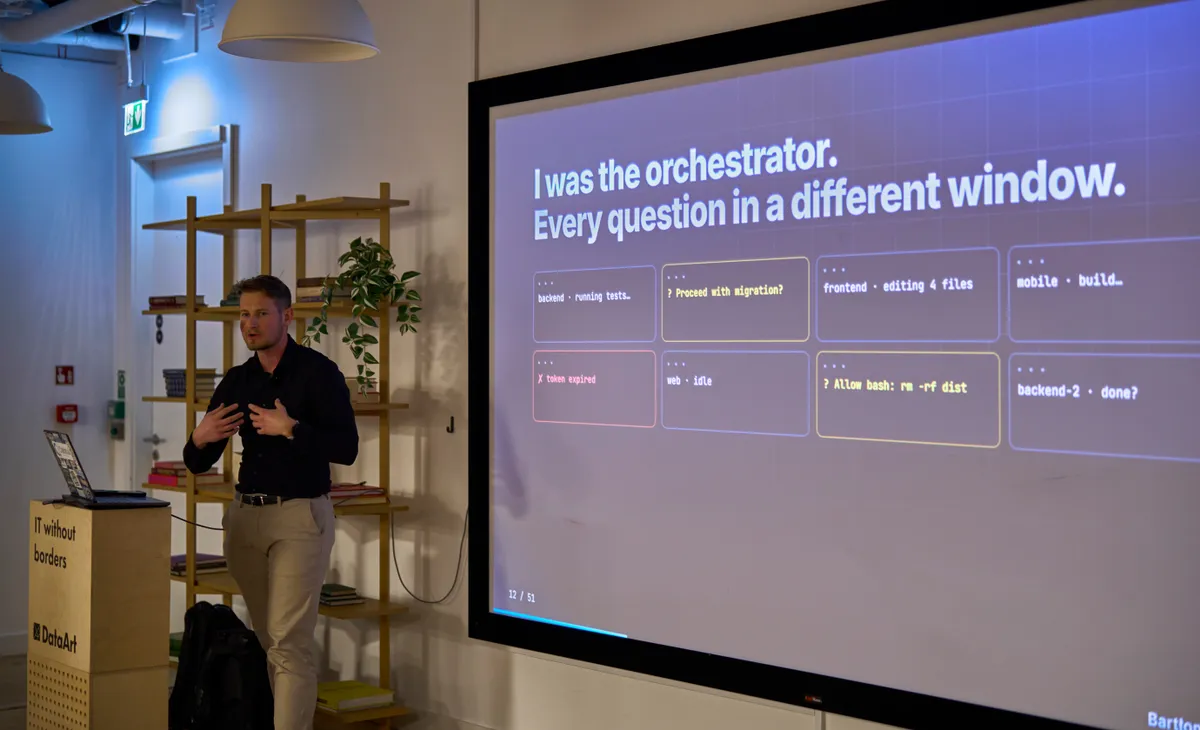
Running Claude Code multiple sessions in parallel? The bottleneck isn't the model, it's your attention. How I got out of context switching hell.


Bartłomiej Szczygło
ARPOS is the platform my agents live on — a meta-harness that turns single coding agents into a team that runs companies and software factories. Today it runs my own startups and serves as my personal assistant.

The operator
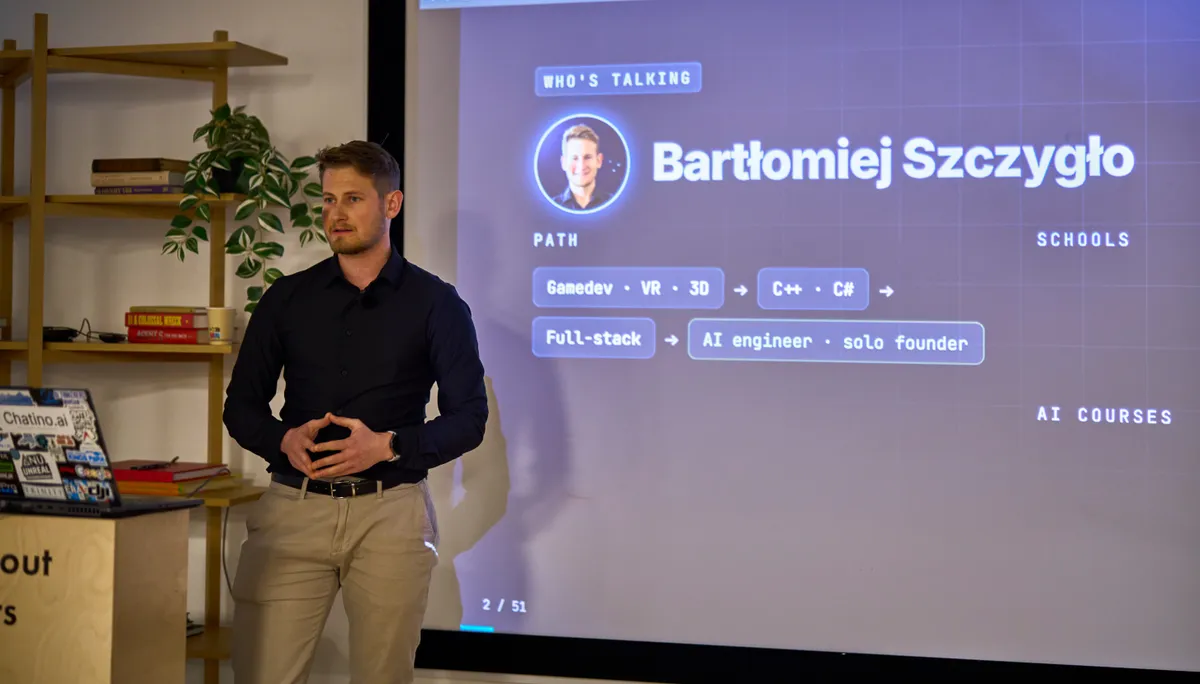
I'm Bartek — AI Engineer at PwC and founder of Atos Software in Warsaw.
I set the direction and approve what matters.
They do the rest.
In active development
Imagine Claude Code sessions on a VPS — each with its own identity and persistent storage, working as teammates that message and delegate to each other. That's ARPOS.
Persistent agent desks — an agent keeps its workspace, repos and installed tools between sessions instead of starting from zero.
Central credential vault: agents act as a logged-in account without the secret ever entering the model's context.
Browser, CLI, SSH and HTTP access as first-class agent tools, each with its own guardrails.
Fail-closed defences against prompt injection from untrusted pages, files and inboxes.
Public API and evaluations, so agent behaviour is measured rather than assumed.
Agent to agent
One agent with every tool is a demo. A team that delegates, asks and reviews is a company.
Long-form breakdowns of a single problem in agent systems: what breaks, why the obvious fix fails, what actually works. Plus the architecture and environment multi-agent systems need.
Running Claude Code multiple sessions in parallel? The bottleneck isn't the model, it's your attention. How I got out of context switching hell.
A practical guide to AI agent security: agents use the access, never the key. Smallest blast radius, Rule of Two, prompt injection, isolation.
What I am deep in right now.
The layer above Claude Code, Codex and friends: desks, credentials, scheduling and orchestration that turn single agents into a team.
Agents that take a ticket and ship a well-tested pull request — sandboxes, review gates, and the places a human still has to look.
Tools, CLIs and APIs designed for an agent as the user: what it can discover, call, and recover from when a call fails.
What goes into the window and in what order: memory, retrieval, compaction, and prompts that survive a model upgrade.
Prompt injection, fail-closed guardrails, untrusted content and keeping secrets out of a model's reach.
Adoption, process design and ROI — what happens when agents touch a real company instead of a benchmark.

Compliance SaaS for Polish housing developers
Live since 2025
B2B SaaS that automates the daily price-disclosure duty Polish housing developers have carried since 11 July 2025 — an obligation the regulator can fine at up to 10% of annual turnover, turned into a background job.

Marketplace and management system for kayak rentals
Live since 2025
A booking portal aggregating 250+ kayak routes from 50+ rental companies across 15 Polish provinces, plus the management system the rental companies themselves run on.

AI language learning for schools and tutors
Live since 2025
A language-learning platform where multi-agent pipelines generate and adapt lesson material in real time, sold B2B and B2B2C to language schools and tutors.
My main build. Writing about it in public.
AI Engineer.
Founded my own company. Shipped SuperLango, and co-founded LegalnyDeweloper and KayakBooking — alongside client automation work.
CTO of an AI chatbot startup for e-commerce: assistants trained on a shop's own data and the product around them.
Software engineer.
VR startups and real-time 3D — voice conversations with photorealistic avatars before ChatGPT was public. 20+ hackathons since high school.
Computer Science at Warsaw University of Technology; Fachhochschule Salzburg; postgraduate sales and marketing at Asbiro; AI_devs and 10xDevs.
ARPOS: The harness around the harness
ARPOS, the runtime I am building for autonomous agents, and what it takes to let them run unattended.
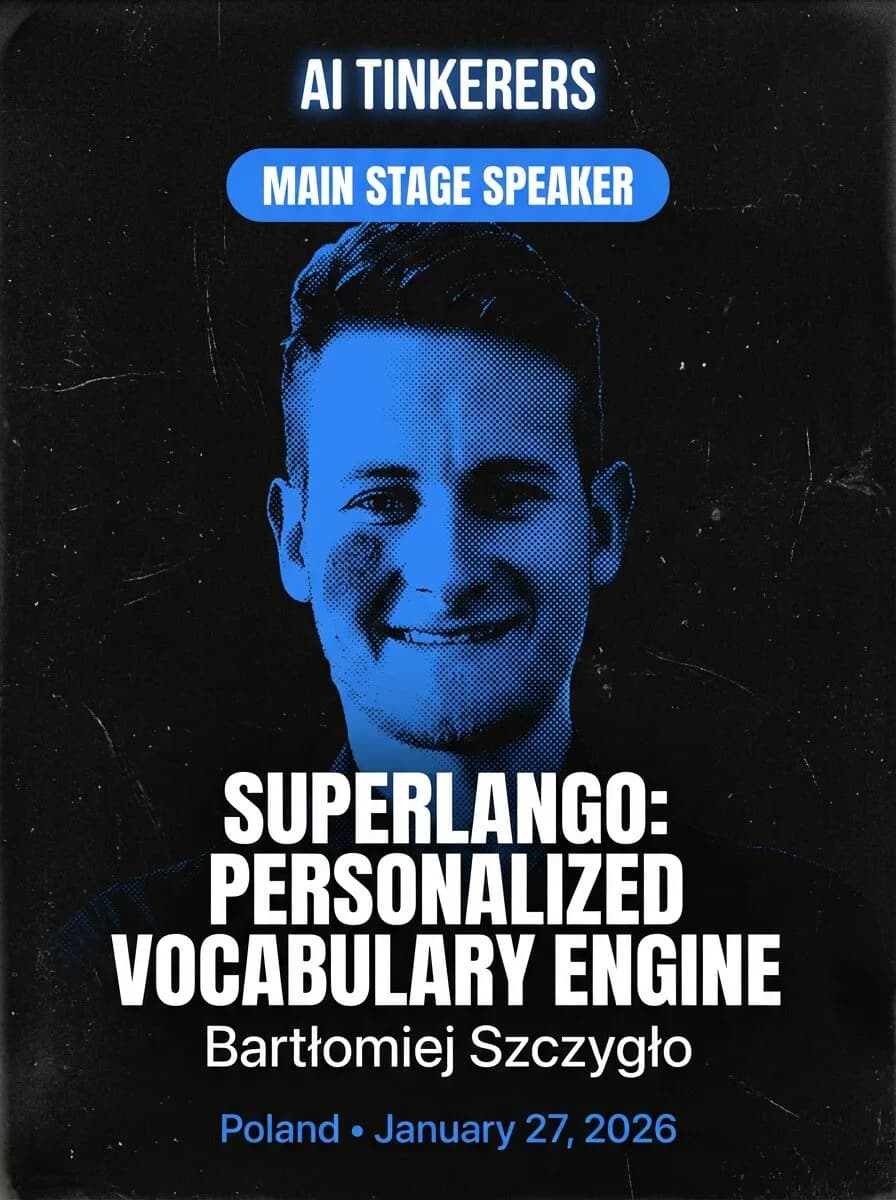
How SuperLango Turns Any Conversation Into a Personalized Vocabulary Learning Engine
Where large language models beat classical NLP and where they do not, and the multi-agent pipeline behind SuperLango that turns one short conversation into 5,000 flashcards ordered around what a given learner actually needs. Plus running agents over whole databases, and why image generation stays the hardest part of the pipeline.
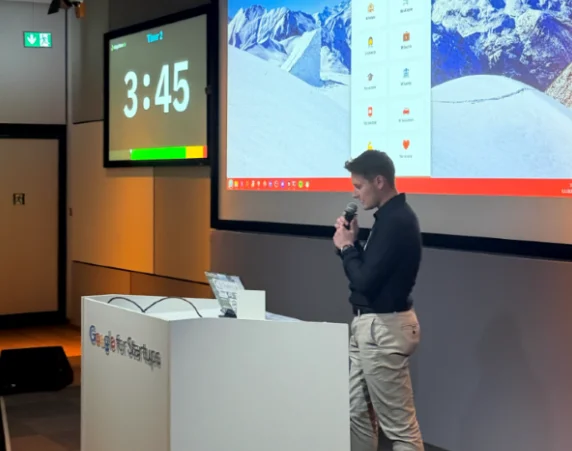
From one agent on one process to a full software factory. Tell me where you are; I'll tell you what's worth automating first.
Off the keyboard: Ironman, triathlons, ultramarathons, climbing and mountains.